
Waller Creek Software builds custom systems in Austin for healthcare, manufacturing and sales teams, and you work directly with co-founders Taylor Moses and Jamison Dyal. Our healthcare work is fully HIPAA compliant, we sign BAAs, and a HIPAA-trained team member is involved in the build. Instead of a feature list, this page walks through a referral one person at a time.
For the referring office: an easy way to send, and a reason to send again
Referring providers choose specialists partly on how easy they are to work with. If sending you a patient means a phone call, a fax and a second call to confirm it arrived, their staff notice. A simple secure submission page, alongside a controlled path for the faxes and electronic referrals your team already receives, lowers that effort without forcing anyone to change overnight.
Then keep them informed. When the patient is scheduled and when the visit is complete, the referring office gets a status update without anyone on your team picking up the phone. Good referral management software in Austin treats the referring office like a customer, because in practice that is exactly what it is.
For the coordinator: one queue instead of five places to look
Most coordinators work from a fax inbox, an email folder, a spreadsheet and a pad of sticky notes. We replace that with a single queue that shows every open referral, how long it has waited and what it needs next. Missing documents, insurance questions and patient contact attempts each have a place on the referral itself.
The queue is designed with your coordinators, not for them. We sit with the people doing the work during Discover, watch how they triage on a busy morning, and shape the screen around those habits.
- Every referral sorted by status and how long it has waited
- Missing items listed on the referral, not in someone's head
- Contact attempts logged with date, method and outcome
- Reassignment in a click when a coordinator is out
- Notes that stay with the referral instead of an inbox
- 1 Referral received
- 2 Authorization
- 3 Scheduled
- 4 Patient seen
- 5 Report back
For the patient: fewer calls that start with "we never got it"
Patients experience a lost referral as silence. They wait for a call that never comes, then call the referring office, which calls you. Referral management software that sends the patient a clear message when the referral arrives, a link to confirm a time, and a reminder before the visit removes most of that loop.
Where it fits your workflow, patients can upload an insurance card or complete intake forms from the same link, so the first visit starts with the paperwork already done. Messages never include clinical details, only what the patient needs to take the next step.
✕Referrals spread across fax, email and spreadsheets
✓One queue with every open referral and its status
✕Referring offices call to ask if it arrived
✓Automatic updates when patients are scheduled and seen
✕Clinicians search scanned pages for the question
✓A summary with the reason for referral first
✕Stalled referrals found when patients complain
✓Stage targets that flag referrals before they stall
✕No reliable count of referrals by source
✓Reports by office, provider and conversion to visits
For the clinician: the reason for referral at the top
A specialist should not dig through a stack of scanned pages to learn why the patient is coming in. We design a referral summary with your providers that shows the clinical question, relevant history, attached imaging or labs, and the referring provider's contact details in one place.
The clinician decides whether to accept, ask for more information or redirect the referral elsewhere. The software records that decision, the reason and the time, and it moves the referral to the right next step. It never makes the clinical call on anyone's behalf.
For practice leaders: where referrals come from and where they stall
Referrals are a growth channel, and many practices have no reliable view of it. Because every referral carries its source, status and dates, you can see which offices send the most patients, which referral types turn into visits, and where the process slows down between arrival and the first appointment.
That view is one of the most practical things referral management software gives a group. It helps you decide where to spend outreach time, whether that means primary care offices in Pflugerville or physicians practicing near Dell Seton Medical Center. It also shows when a coordinator needs help before patients start to feel the backlog.
The system handles
- Logging and sorting new referrals
- Overdue alerts
- Status updates to referring offices
Your people decide
- Clinical triage
- Authorization calls
- Patient scheduling conversations
Behind the screens: security and connections
Referrals carry protected health information from the moment they arrive. Access is role based, sign in uses multi-factor authentication, data is encrypted in transit and at rest, and every view and change goes into an audit trail. Our referral management software for Austin specialists is fully HIPAA compliant from the first release.
We connect to your EHR, scheduling system and fax service where the vendor's APIs or integration options allow. When a connection is not possible, we design a controlled handoff with a clear owner, so a referral never waits on someone remembering to copy it across.
Referrals in sales and manufacturing work the same way
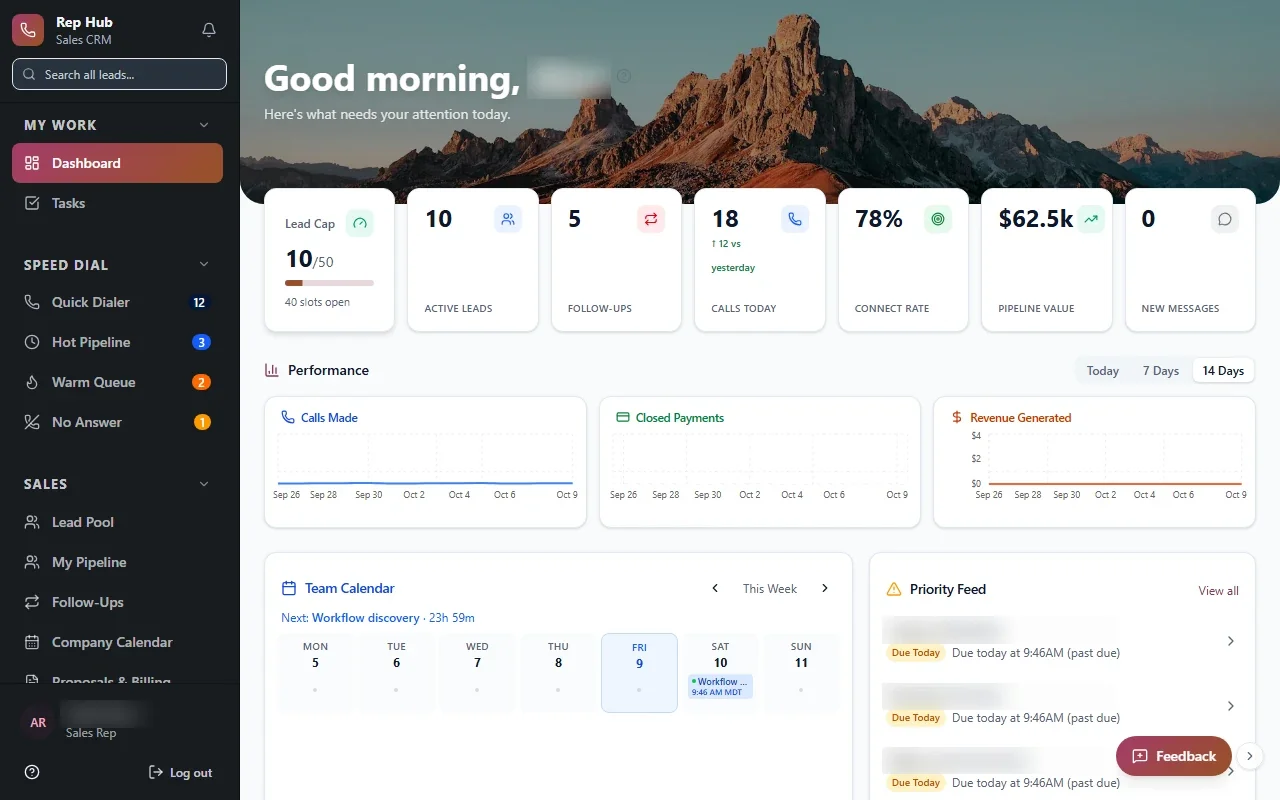
Swap patients for customers and the shape is familiar. A sales team running a partner program needs to know which partner sent each lead, whether it closed and when the partner gets paid. Rep Hub, a sales platform we built, ties signed and paid deals to delivery and commissions, and partner referrals follow that same path.
A manufacturer that receives service requests through dealers or distributors faces the same handoff problem. The Industrial Operations Platform we built lets leaders manage by exception, and a referral queue with clear statuses applies that idea to incoming work. The same referral management software design can serve any industry with a handoff between organizations.